Low maintenance is not no maintenance. It means choosing which tasks the homeowner is willing to repeat, then designing the property so those tasks are predictable and accessible.
This framework is for homeowners considering changes in Clinton, Framingham, Natick, Marlborough, Hudson, Sudbury, and other MetroWest communities. The towns are intended audiences, not a promise of service availability.
Begin with a maintenance inventory
For one growing season, record time spent mowing, trimming, watering, weeding, pruning, replacing annuals, moving hoses, managing leaves, cleaning hardscape, and repairing drainage or irrigation. Mark where each task happens.
Then choose a realistic maintenance level:
- Which weekly tasks are acceptable?
- Which seasonal tasks can be grouped?
- Who performs the work?
- What access, tools, storage, and water are available?
- Which areas must stay open for play, pets, gathering, or snow storage?
Without this inventory, “low maintenance” often means moving work from one category to another.
Simplify lawn shape before reducing lawn
Lawn has a clear function on many properties. The first opportunity may be to remove narrow strips, sharp corners, obstacles, or steep pieces that require repeated trimming. A simple edge can reduce maneuvering even when the total lawn area changes little.
When lawn is converted to a bed, groundcover, meadow, or hardscape, plan establishment and long-term care. The Massachusetts pollinator habitat framework notes that meadow and garden establishment can require sustained watering and weed management before later maintenance declines.
Match every plant to its working conditions
Record light, soil moisture, drainage, salt exposure, browsing, and mature size. A plant crowded against a walk or window creates recurring pruning; a moisture-loving plant in a dry bed creates recurring watering.
Use a short palette of plants with compatible needs. Repetition can make identification, irrigation, and seasonal care easier. Include enough access to weed, prune, inspect utilities, and divide plants without stepping through the bed.
Use mulch as a managed layer
Mulch can suppress some weeds, moderate soil conditions, and protect bare soil, but it still needs inspection and renewal. Follow UMass mulch guidance for material selection, appropriate depth, and clearance from trunks and stems.
Avoid adding a full new layer every year without measuring what remains. Excess material can bury crowns and hold moisture against bark.
Automate only after fixing the layout
Automatic irrigation can reduce the task of moving hoses, but it adds inspections, programming, leak repair, seasonal service, and water management. First correct overspray, mixed plant needs, poor pressure, broken heads, and runoff.
EPA WaterSense-labeled controllers can adjust schedules using weather or soil information under labeled conditions. They do not guarantee a particular bill reduction, and they cannot compensate for a poorly designed system.
Treat hardscape as maintained infrastructure
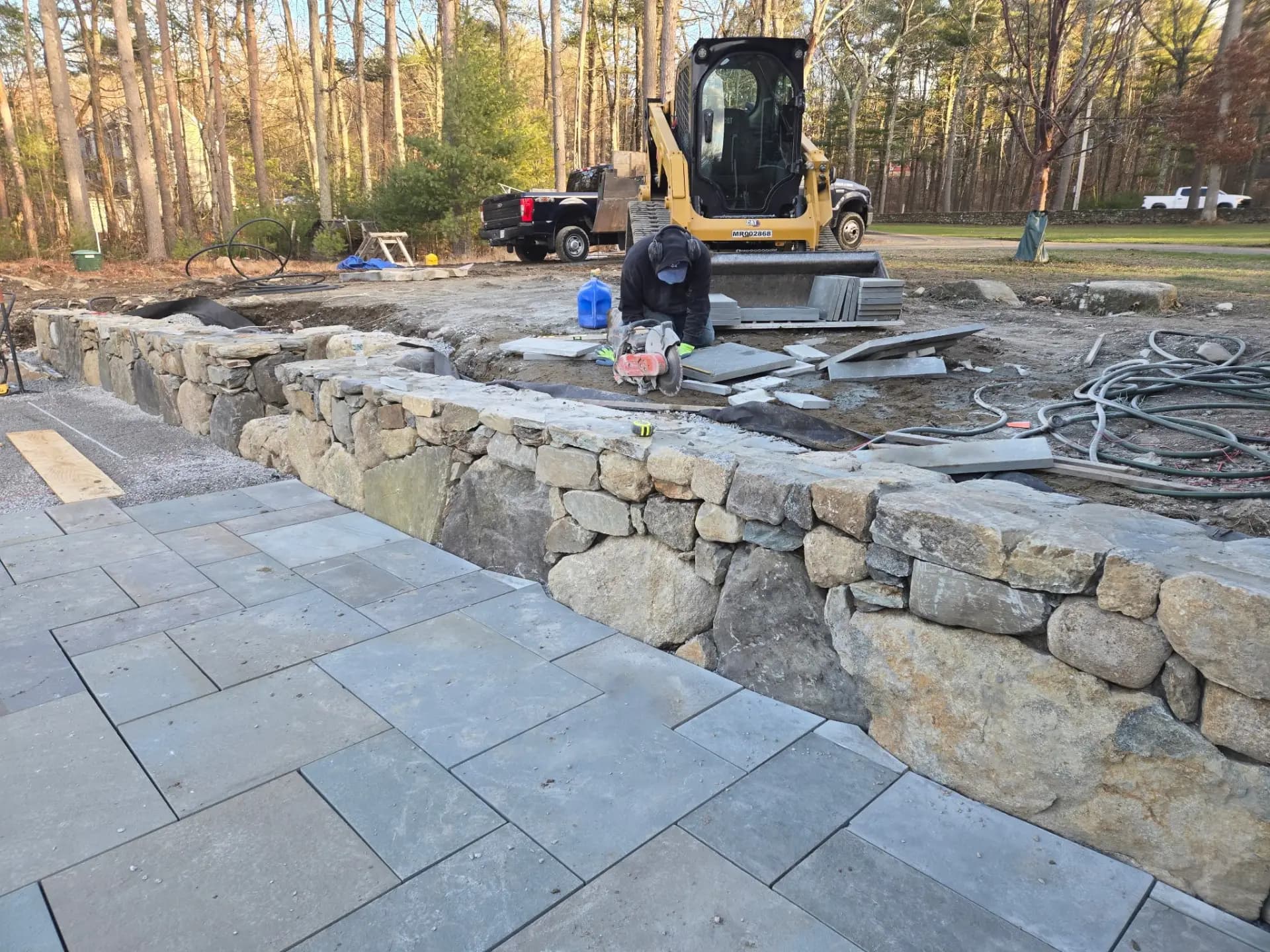
Patios and walkways remove mowing and irrigation from their footprint, but they still need drainage inspection, cleaning, joint or edge maintenance, and occasional repair. Permeable systems have their own cleaning and infiltration requirements; consult EPA's permeable-pavement guidance for maintenance considerations, then ask how the proposed material will be inspected and cleaned.
Choose the amount of hardscape based on use, access, runoff, snow handling, and the maintenance the selected material requires—not on the claim that it is maintenance-free.
Compare task tradeoffs honestly
| Design choice | Tasks it may reduce | Tasks that remain or increase |
|---|---|---|
| Simpler lawn edge | Detailed trimming and mower maneuvering | Mowing, fertility decisions, leaf management |
| Site-matched perennial bed | Replanting annuals and some supplemental watering | Establishment, weeding, division, editing spread |
| Reduced-mow area | Frequent mowing | Establishment, invasive-plant monitoring, annual cutting |
| Mulched bed | Some weed germination and exposed-soil care | Depth checks, edging, replenishment, volunteer plants |
| Automatic irrigation | Moving hoses and manual timing | Programming, leak checks, seasonal and component service |
| Patio or path | Mowing and watering on that footprint | Cleaning, drainage, joints, edges, repairs, snow management |
Build a seasonal maintenance sheet
For each area, list spring, summer, fall, and winter tasks. Add the responsible person, trigger condition, required tool, and access route. A useful plan might say “inspect after heavy rain” or “cut back after new growth is visible,” rather than assigning every task to an arbitrary date.
Start with the highest-friction area
Choose the space that creates the most recurring work or failure: a narrow lawn strip, a constantly dry bed, a leaking irrigation zone, or a path that turns muddy. Improve one area, record the result, and apply what worked elsewhere.
This article focuses on labor and maintenance decisions. For plant taxonomy, see the native plant selection guide. For environmental inputs and stormwater, see sustainable landscaping practices.
The hardscaping, garden design, lawn care, and irrigation pages provide discussion points for an estimate. Use the contact form to confirm the location, scope, and current availability; this article does not state project prices, payback periods, or quantified savings.