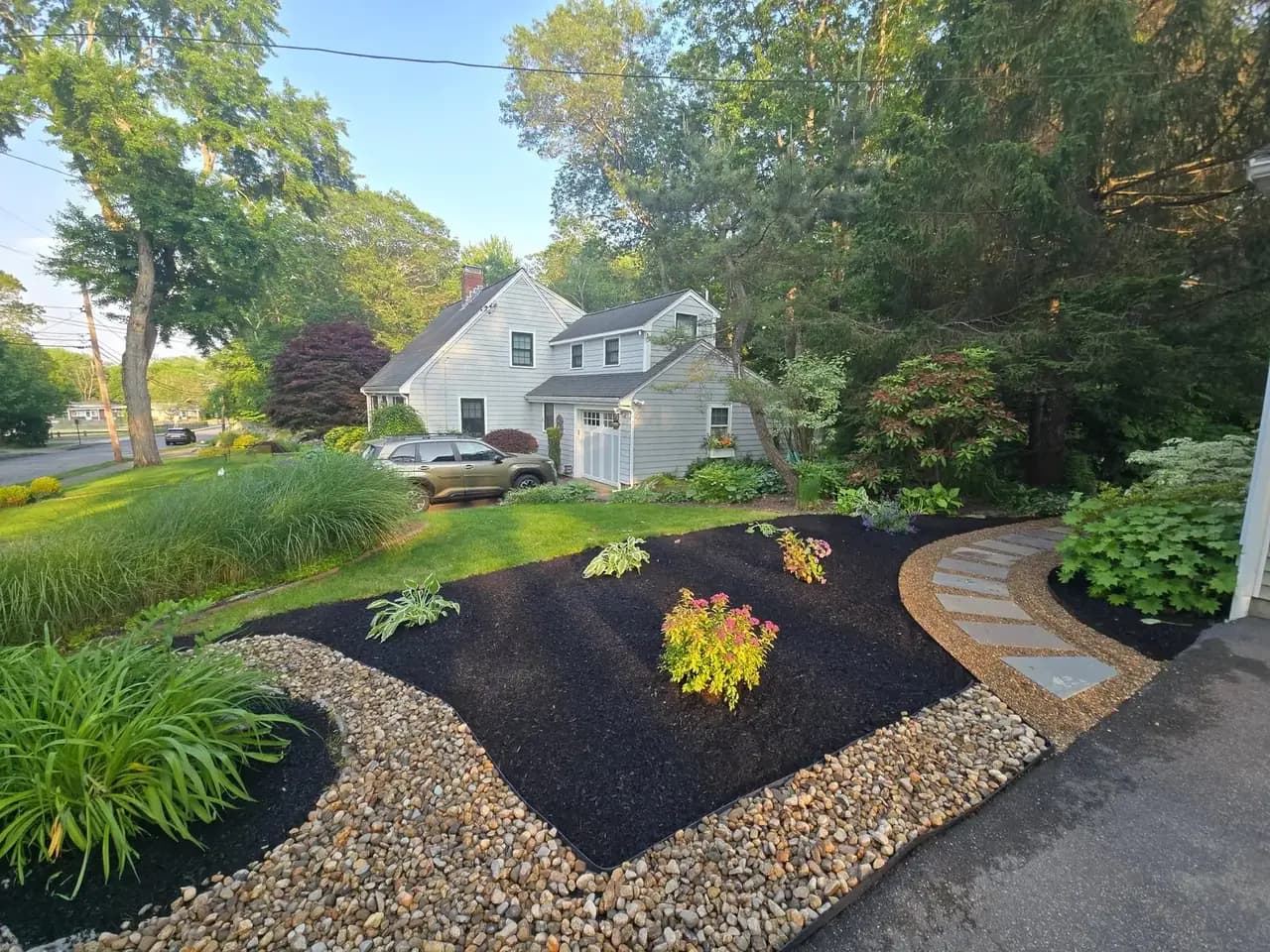
Garden Design
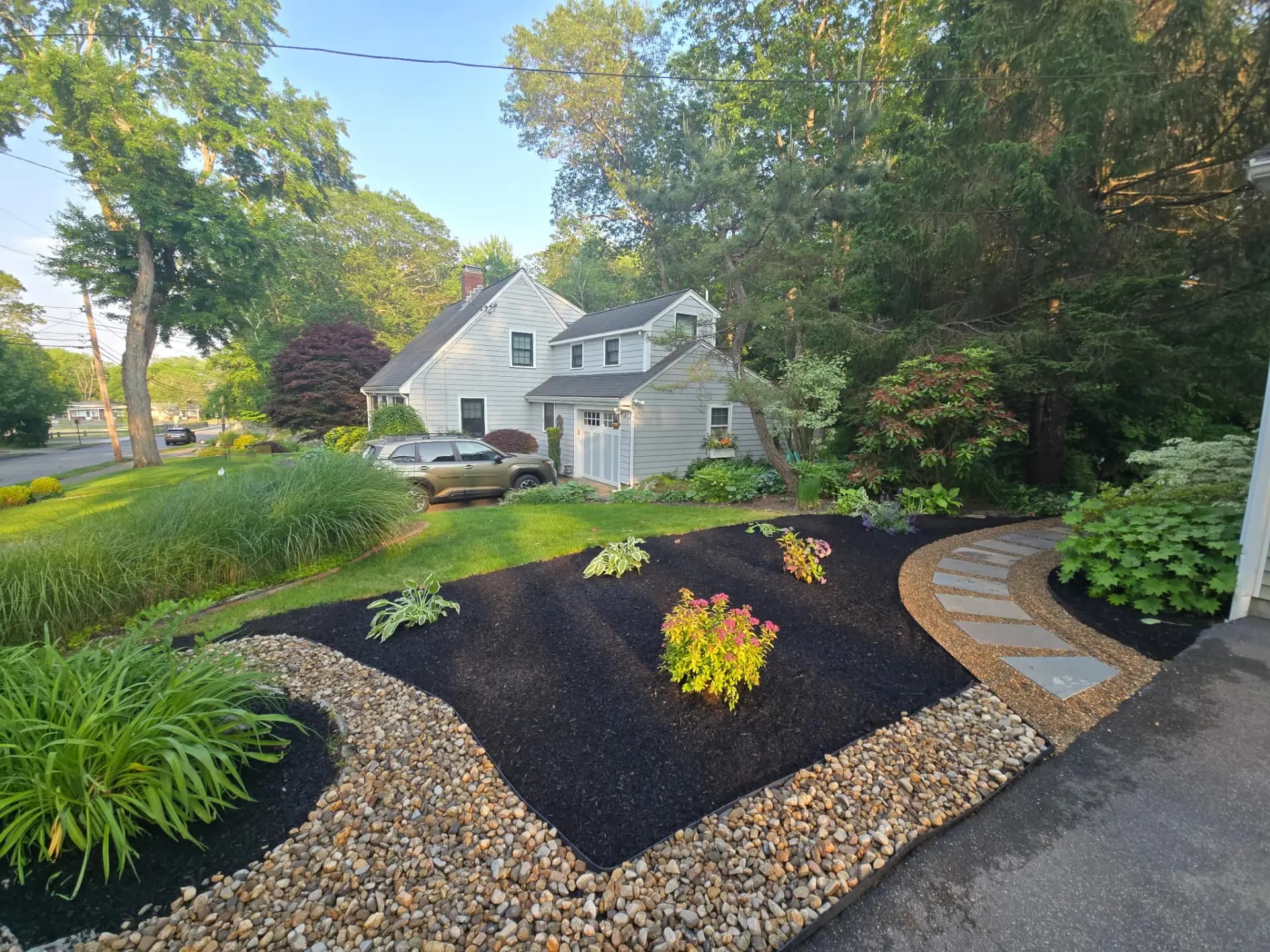
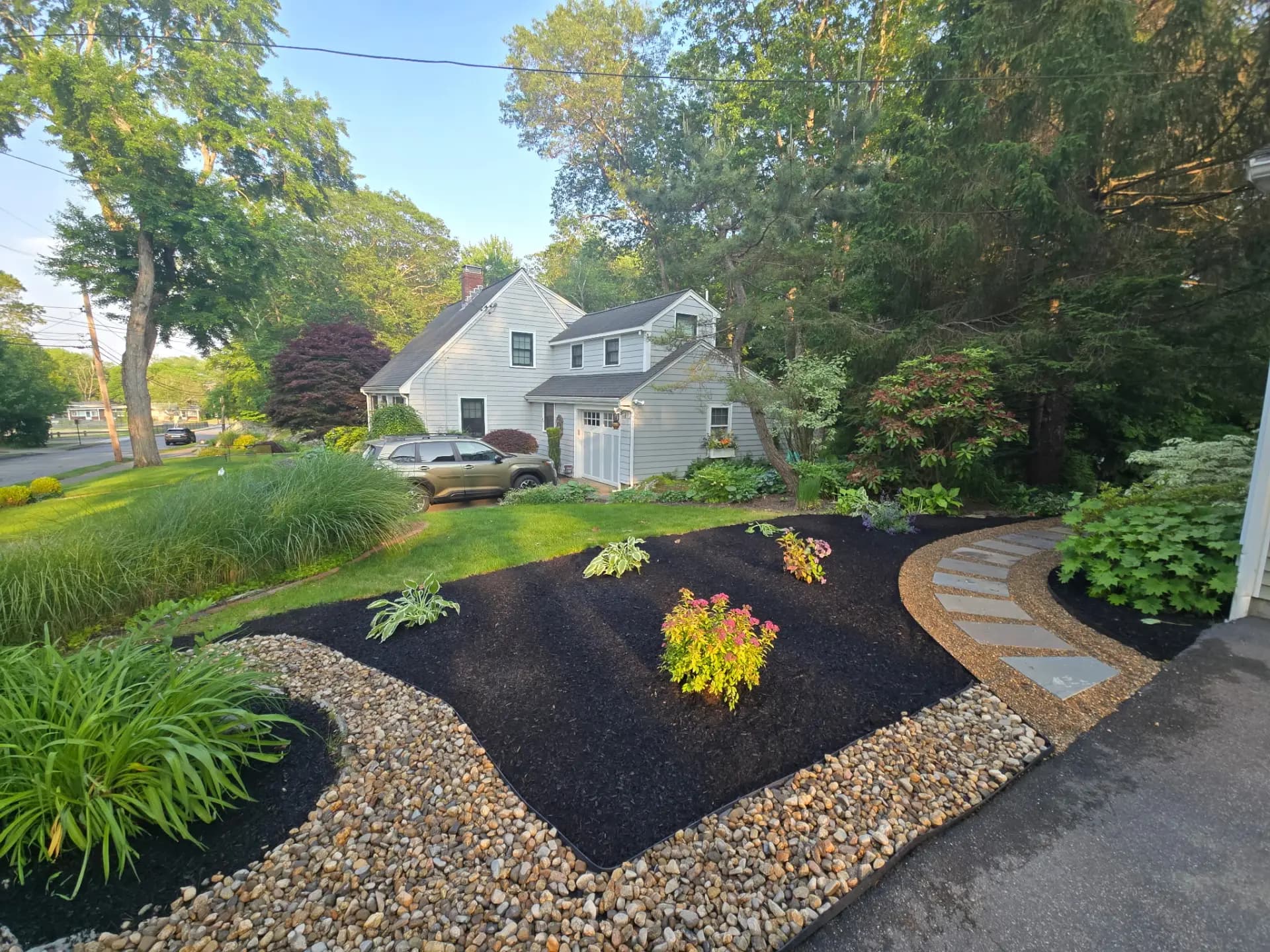
Custom garden designs with beautiful flowers, shrubs, and decorative elements.
Get a free Garden Design estimate
Professional Garden Design Services

Transform your outdoor space with custom garden design services from Monges Landscaping, serving homeowners throughout Boston, Cambridge, Newton, Wellesley, Brookline, and communities across Metro West and Worcester. A thoughtfully designed garden does more than beautify your property — it creates functional outdoor rooms for relaxation and entertaining, increases home value by 10-15% according to landscape industry studies, provides year-round visual interest through every season, supports local wildlife and pollinators, and delivers daily enjoyment that few other home improvements can match. Whether you have a compact urban lot in Cambridge or a spacious estate in Wellesley, professional garden design turns your outdoor space into a living extension of your home.
Understanding why professional design matters starts with recognizing that a garden is not just a collection of plants. It is a complex system where every element — plants, soil, light, water, hardscape, and space — must work together harmoniously. A common mistake homeowners make is buying plants impulsively at the nursery and placing them without a plan. The result is a disjointed landscape where plants outgrow their spaces, bloom times do not overlap for continuous color, maintenance demands are unpredictable, and the overall composition lacks visual coherence. Professional garden design eliminates these problems by starting with a comprehensive plan that accounts for every variable.
Our garden design process is collaborative and thorough. It begins with an on-site consultation (typically 60-90 minutes) where our designer walks your entire property, assessing conditions that will determine what can thrive and where. We evaluate soil type and quality — clay-heavy soils common in many Boston neighborhoods drain poorly and require different plant selection than the sandy loam found in some suburban areas. We map sun exposure patterns throughout the day, noting full sun areas (6+ hours), partial shade (3-6 hours), and deep shade zones (under 3 hours). We assess drainage patterns after rain, identify microclimates created by buildings, walls, and pavement (reflected heat, wind tunnels, frost pockets), and inventory existing vegetation worth keeping. We photograph the property from multiple angles and take measurements for accurate planning.
During this consultation, we discuss your vision and lifestyle needs in depth. How will you use the garden — for entertaining, children's play, quiet reading, cutting flowers, growing food, or simply enjoying from inside the house? What level of maintenance are you willing to perform or invest in? Do you have color preferences, favorite plants, or styles that inspire you? Are there problem areas you want to address — a wet spot, an ugly view to screen, a slope that needs stabilizing? What is your budget range? This conversation is essential because great garden design is not about imposing a generic plan — it is about creating a space uniquely suited to your property, your preferences, and your life.
From this information, our designers create a detailed planting plan that applies fundamental design principles. Color theory guides our plant selection — we use complementary colors (purple and yellow, for example) for vibrant contrast, analogous colors (blues, purples, and pinks) for harmonious, serene compositions, and hot colors (reds, oranges, yellows) in areas where you want energy and focal points. Texture plays an equally important role: the bold, broad leaves of hostas contrast beautifully with the fine, airy sprays of ornamental grasses, creating visual depth even when nothing is in bloom. Height layering ensures every plant is visible — tall plants in the back, medium in the middle, short in front for borders viewed from one side, or tall in the center with graduating heights outward for island beds. Repetition creates rhythm and unity — rather than planting one of everything, we repeat key plants at intervals throughout the garden, tying the design together.
Perhaps the most important design consideration for Massachusetts gardens is four-season interest. A garden that is spectacular in June but barren from November through March fails for half the year. We design for year-round beauty by layering seasonal elements. Spring brings bulbs (crocuses, daffodils, tulips), flowering trees (dogwood, magnolia, crabapple), and early perennials (bleeding heart, pulmonaria). Summer delivers the full show with roses, daylilies, lavender, phlox, and hydrangeas. Fall features ornamental grasses at their peak, late-blooming asters and sedums, brilliant foliage from Japanese maples and burning bush, and berries on winterberry holly. Winter relies on evergreen structure — boxwood, holly, conifers — along with ornamental bark (birch, red twig dogwood), persistent seed heads, and the architectural form of deciduous trees and grasses.
We specialize in plants that thrive in Massachusetts' USDA Zone 6b climate, where winter temperatures can dip to -5°F to 0°F. Native New England species form the backbone of our designs because they are adapted to our soil, rainfall patterns, and pest pressures, and they support local ecosystems. Our favorite native performers include Echinacea (coneflower) for summer color and wildlife value, Rudbeckia (black-eyed Susan) for reliable midsummer gold, Asclepias (butterfly weed) as the essential host plant for monarch butterflies, Baptisia (false indigo) for blue-purple spring spires and architectural winter seed pods, native ferns for deep shade elegance, and Panicum (switchgrass) for airy autumn texture. We complement natives with proven non-native garden plants including Hydrangea (paniculata, arborescens, and macrophylla varieties), Hosta (the undisputed queen of shade gardens), Hemerocallis (daylily, for foolproof summer color), Lavandula (lavender, for fragrance and pollinator support), and Acer palmatum (Japanese maple, for unmatched year-round beauty).
Our installation process is as meticulous as our design process. We begin with soil preparation — which many landscapers shortchange but which determines long-term plant success. We test soil pH (most Massachusetts soils are acidic, pH 5.5-6.0) and amend as needed. We incorporate 2-4 inches of quality compost throughout the planting beds, improving soil structure, drainage, nutrient content, and beneficial microbial activity. For areas with heavy clay, we may add coarse sand or expanded shale to improve drainage. Each plant is positioned according to the design plan at the correct spacing for its mature size — planting too closely creates overcrowding within 2-3 years, while planting too far apart leaves gaps that weeds exploit. We dig each hole to the proper depth (crown of the plant level with the soil surface, never buried) and twice the width of the root ball. We install drip irrigation systems for beds when desired, running low-volume emitters to each plant zone for efficient, targeted watering. Finally, we apply 2-3 inches of quality mulch to all bed areas.
We design gardens for every style, property type, and budget. Cottage gardens overflow with masses of perennials in informal, romantic plantings — think English garden charm adapted for New England conditions. Modern landscape designs use architectural plants, ornamental grasses, clean lines, and minimalist hardscape elements for a sleek, contemporary look. Formal gardens employ symmetry, boxwood hedges, geometric beds, and classic plant combinations for timeless elegance. Woodland gardens transform shaded areas under mature trees into lush, layered tapestries of ferns, hostas, astilbe, and native groundcovers. We also create specialized gardens including pollinator gardens designed to support bees, butterflies, and hummingbirds, rain gardens that capture and filter stormwater runoff, edible gardens that blend vegetables and herbs into ornamental plantings, and low-water designs for homeowners wanting to minimize irrigation dependency.
Garden design and installation costs vary based on garden size, plant selection, soil preparation needs, and design complexity. Small garden projects (a single foundation bed refresh or entryway planting) typically range from $1,500 to $3,500. Mid-range projects (multiple bed areas, significant new plantings) run $5,000 to $15,000. Comprehensive whole-property designs with extensive plantings, irrigation, and hardscape integration range from $15,000 to $40,000+. We offer a free initial design consultation to discuss your goals and provide a preliminary budget estimate. Contact Monges Landscaping at (978) 860-5474 to start planning your dream garden.
Ready for Professional Garden Design?
Get a free estimate today. We serve Boston, Metro West, and Worcester areas.
What We Offer
Benefits
What Our Clients Say
"Monges completely transformed our backyard! The garden design they created is absolutely stunning. We spend so much more time outdoors now."
Amanda Wilson
Homeowner
Related Services
Frequently Asked Questions

Ready to Transform Your Landscape?
Get a free consultation and quote today