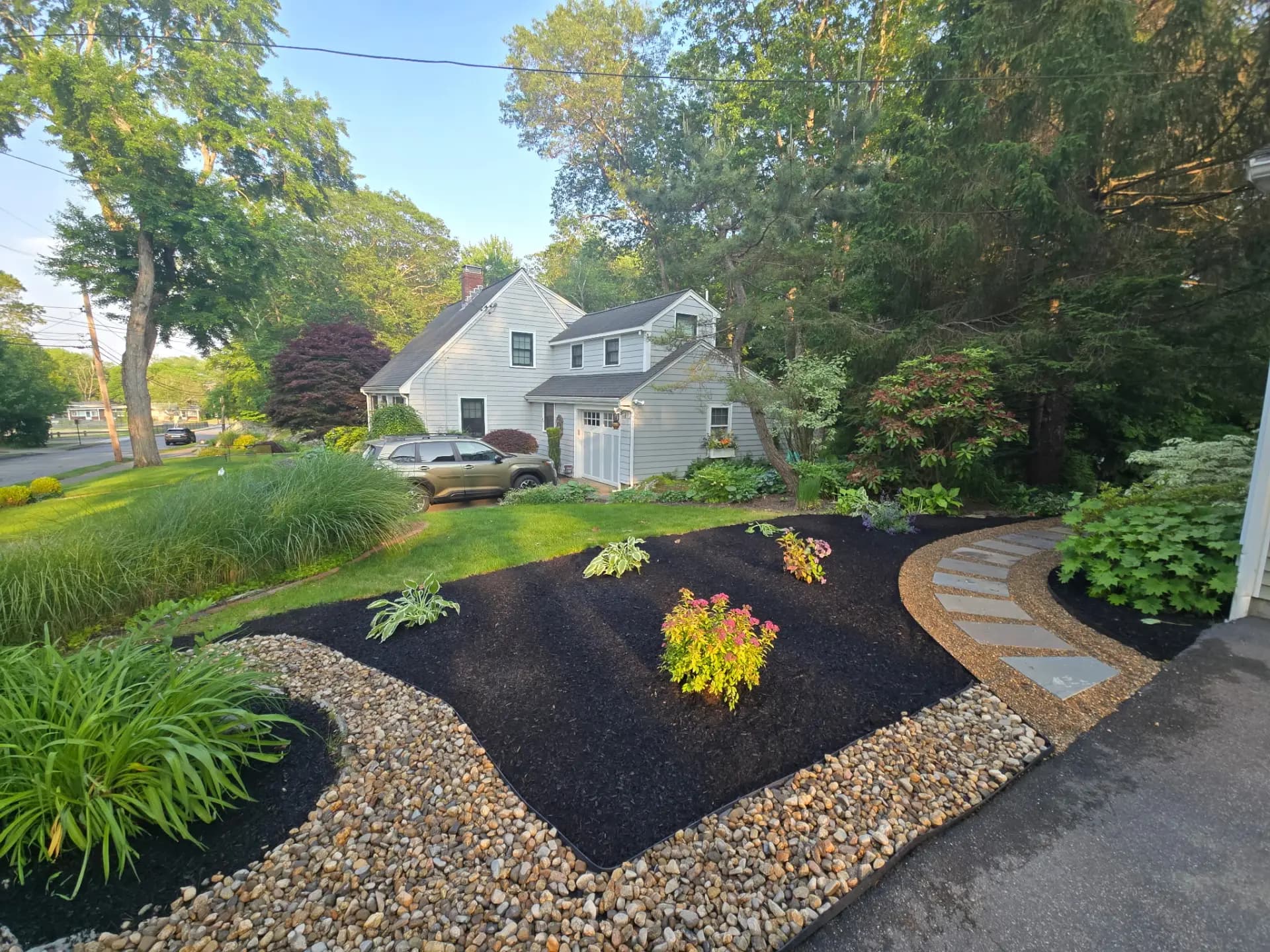
- Native plants reduce water use by 50-70% and need no fertilizer once established
- A single native oak supports 500+ caterpillar species — essential food for nesting birds
- Massachusetts native plants thrive in our Zone 6b climate without coddling
- Native landscapes increase property value and curb appeal with year-round interest
- Start small — even replacing one garden bed with natives makes a meaningful difference
If you have driven through Clinton, Framingham, Natick, or any Metro West Massachusetts neighborhood lately, you may have noticed a shift. Lawns are getting smaller. Garden beds are getting wilder. And the plants filling those beds look different from the neatly clipped boxwoods and imported hostas of years past. Welcome to the native plant revolution — and it is transforming how we think about landscaping in Greater Boston.
Native plants are species that evolved naturally in a specific region over thousands of years. In Massachusetts, that means plants adapted to our Zone 6b winters, our acidic soils, our humid summers, and our unpredictable spring weather. They do not need coddling, they do not need constant watering, and they support the birds, bees, and butterflies that keep our local ecosystem healthy.
Here is why native plant landscaping is the biggest trend in Metro West MA this year — and why it might be the smartest landscaping decision you ever make.
The Problem With Traditional Landscaping
Traditional landscaping in the Boston suburbs has followed a familiar formula for decades: a manicured lawn, a row of foundation shrubs (usually non-native), a few annual flower beds replanted every spring, and an irrigation system running all summer to keep everything alive.
This approach works — but at a cost. The average American household uses over 30,000 gallons of water per year on outdoor irrigation. Chemical fertilizers and pesticides run off into local waterways, affecting water quality in places like the Sudbury River and Whitehall Reservoir. And those beautiful imported plants? They provide almost zero food or habitat for native wildlife. A non-native ornamental cherry tree, for example, supports roughly 1 species of caterpillar. A native oak supports over 500.
Homeowners across Metro West are waking up to these realities — and they are choosing a better path.
What Makes a Plant "Native" to Massachusetts?
A native plant is one that existed in a region before European colonization — roughly before the 1600s in New England. These plants co-evolved with local insects, birds, and soil organisms over millennia, creating intricate ecological relationships that non-native plants simply cannot replicate.
Massachusetts has an incredibly rich native flora. Our forests, meadows, wetlands, and coastal areas support thousands of native species adapted to every possible growing condition. From the deep shade beneath old-growth oaks to the full-sun exposure of open meadows, there is a native plant perfectly suited for every spot in your Metro West landscape.
The key distinction: native plants are not "wildflowers" or "weeds." Many native species are stunningly beautiful — equal to or exceeding the ornamental value of any imported garden plant. The difference is that they also contribute to the local ecosystem instead of just sitting there looking pretty.
Top 15 Native Plants for Metro West MA Landscapes
Here are our top recommendations for native plants that thrive in the Clinton, Framingham, Natick, and Greater Boston area. Each one has been selected for beauty, hardiness, low maintenance, and ecological value.
Perennials
1. Purple Coneflower (Echinacea purpurea)
The quintessential native perennial. Purple-pink daisy-like flowers bloom from June through September, attracting butterflies and bees all summer. Seed heads provide winter food for goldfinches. Thrives in full sun, tolerates drought once established. Height: 2-4 feet.
2. Black-Eyed Susan (Rudbeckia hirta)
Bright golden-yellow flowers with dark centers bloom prolifically from midsummer through fall. One of the most reliable and recognizable native wildflowers. Self-seeds freely to fill in gaps. Full sun to light shade. Height: 2-3 feet.
3. Butterfly Weed (Asclepias tuberosa)
Brilliant orange clusters of flowers are a magnet for monarch butterflies — this is the host plant that monarch caterpillars must have to survive. Drought-tolerant once established. Full sun, well-drained soil. Height: 1-2 feet.
4. New England Aster (Symphyotrichum novae-angliae)
Masses of vibrant purple-pink flowers with yellow centers explode in September and October, providing essential late-season nectar for migrating monarchs and native bees. One of the last flowers standing before frost. Full sun. Height: 3-6 feet.
5. Wild Columbine (Aquilegia canadensis)
Delicate red and yellow nodding flowers appear in early spring, attracting hummingbirds returning from migration. One of the first native perennials to bloom. Thrives in partial shade and rocky soils. Height: 1-2 feet.
6. Blue Flag Iris (Iris versicolor)
Elegant blue-violet flowers bloom in late spring to early summer. Perfect for rain gardens, pond edges, or any moist area in your landscape. Massachusetts state flower candidate and native wetland beauty. Height: 2-3 feet.
7. Joe-Pye Weed (Eutrochium purpureum)
Massive dusty-pink flower clusters in late summer attract clouds of butterflies. A statement plant that adds dramatic height and late-season color to the back of borders. Prefers moist soil but adapts to average conditions. Height: 4-7 feet.
Shrubs
8. Winterberry Holly (Ilex verticillata)
Brilliant red berries cover bare branches from November through February, providing stunning winter interest and critical food for overwintering birds. One of the best native plants for four-season appeal. Needs a male pollinator nearby. Height: 6-10 feet.
9. Inkberry Holly (Ilex glabra)
An evergreen native alternative to boxwood for hedges and foundation plantings. Dark, glossy foliage year-round. Tolerates wet soil and shade — conditions that kill most boxwoods. Low maintenance and deer-resistant. Height: 5-8 feet.
10. Sweet Pepperbush (Clethra alnifolia)
Intensely fragrant white flower spikes in July-August fill the garden with a sweet, spicy scent. Attracts bees and butterflies. Tolerates shade and wet soil. Golden fall foliage adds autumn interest. Height: 5-8 feet.
11. Highbush Blueberry (Vaccinium corymbosum)
Yes — the blueberry bush is native to Massachusetts. Spring flowers, summer fruit, spectacular red fall foliage, and attractive winter branch structure make this a true four-season plant. Needs acidic soil (which most Metro West properties already have). Height: 6-12 feet.
12. Red Twig Dogwood (Cornus sericea)
Brilliant crimson-red stems glow against winter snow — one of the most dramatic winter interest plants available. White flower clusters in spring, blue-white berries in summer attract birds. Cut back hard in late winter to encourage the brightest new stem color. Height: 6-9 feet.
Trees
13. Eastern Redbud (Cercis canadensis)
Magenta-pink flowers cover bare branches in early spring before leaves emerge — one of the most spectacular flowering displays of any native tree. Heart-shaped leaves provide light dappled shade. Small size is perfect for residential lots. Height: 20-30 feet.
14. Serviceberry (Amelanchier canadensis)
White flower clouds in early spring, edible blue berries in June (sweeter than blueberries), orange-red fall color, and elegant gray bark in winter. A true four-season native tree. Attracts birds year-round. Height: 15-25 feet.
15. Red Maple (Acer rubrum)
The iconic New England fall color tree. Red flowers in early spring, green summer shade, and blazing scarlet autumn foliage that defines the Massachusetts landscape. Fast-growing shade tree for larger properties. Height: 40-60 feet.
Benefits of Native Plant Landscaping
1. Dramatically Lower Maintenance
Native plants evolved here. They do not need the constant watering, fertilizing, and pest control that exotic species demand. Once established (typically after one growing season), most native plants survive on rainfall alone. You can reduce or eliminate irrigation for native garden beds — saving hundreds of dollars per year in water costs.
2. Support for Pollinators and Wildlife
This is the big one. Native plants support native insects, which support native birds, which support the entire food web. A landscape filled with native plants becomes a functioning ecosystem — a living, buzzing, bird-filled garden instead of a sterile green carpet. In Metro West, where habitat loss from development continues, every native garden makes a measurable difference for local wildlife.
3. Water Conservation
Native plants have deep root systems adapted to Massachusetts rainfall patterns. They do not need supplemental irrigation once established. For homeowners looking to reduce water use — especially as summer droughts become more common in New England — native landscaping is the single most effective strategy.
4. Reduced Chemical Use
Native plants have natural defenses against local pests and diseases. They rarely need pesticides or fungicides. By reducing chemical inputs, you protect your family, pets, soil health, and local waterways.
5. Year-Round Beauty
A well-designed native garden provides interest in every season — spring blooms, summer flowers, fall color, and winter berries and seed heads. Compare this to a traditional lawn, which is green from May to October and brown or snow-covered the rest of the year.
6. Increased Property Value
Sustainable, low-maintenance landscaping is increasingly valued by homebuyers. A native plant garden signals environmental awareness and reduced upkeep costs — both attractive to today's buyers.
How to Transition Your Metro West Landscape to Native Plants
You do not need to rip everything out and start over. The smartest approach is gradual transition:
Year 1: Start with one bed. Convert a garden bed from annuals or tired shrubs to native perennials. This gives you experience with native plants and creates a showcase area.
Year 2: Reduce lawn area. Expand the native bed or create a new one. Consider replacing a section of lawn with a native meadow planting — a mix of grasses and wildflowers that only needs mowing once per year.
Year 3: Add native trees and shrubs. Plant a native tree for shade and a few native shrubs for structure. By now your native areas are established and essentially self-maintaining.
Year 4 and beyond: Continue converting as budget and interest allow. Many homeowners find that once they see the butterflies, birds, and reduced maintenance, they want to go further.
Native Plant Landscaping Costs
Native plant landscaping costs are comparable to traditional landscaping for initial installation, but the long-term savings are significant:
- Initial design and installation: $3,000-$15,000 for a typical residential project (similar to conventional garden installation)
- Year 1 maintenance: Moderate — new plants need watering during establishment
- Year 2+ maintenance: Minimal — dramatically less than conventional landscaping
- Water savings: $200-$800 per year (reduced or eliminated irrigation)
- Fertilizer and chemical savings: $100-$400 per year
- Long-term ROI: Native landscapes typically cost 50-70% less to maintain than conventional landscapes over a 10-year period
Where to Find Native Plants in Metro West MA
Several excellent native plant nurseries serve the Metro West area:
- Nasami Farm (New England Wild Flower Society) in Whately, MA
- Project Native in Housatonic, MA
- New England Wetland Plants in Amherst, MA
- Many local garden centers now carry native plant sections
Or let Monges Landscaping handle the sourcing and installation — we work with trusted New England native plant nurseries to ensure you get healthy, locally-sourced specimens.
Why 2026 Is the Year to Go Native
Several factors are converging to make 2026 the tipping point for native plant landscaping in Metro West:
- Climate awareness is at an all-time high — homeowners want to be part of the solution
- Water costs continue to rise in Massachusetts municipalities
- Pollinator decline is making headlines, and people want to help
- Low-maintenance living is increasingly valued as homeowners seek to spend less time on yard work
- Municipal incentives — some Massachusetts towns now offer rebates or recognition for pollinator-friendly landscapes
The native plant movement is not a fad — it is a fundamental shift in how we think about our relationship with the land. And Metro West Massachusetts is leading the way.
Ready to transform your yard with native plants? Monges Landscaping specializes in native plant design and installation throughout Metro West Massachusetts — from Clinton and Framingham to Natick, Marlborough, and beyond.
Ready to Go Native?
Monges Landscaping specializes in native plant design and installation for homes throughout Clinton, Framingham, Natick, Marlborough, Hudson, and the entire Metro West Massachusetts area. We will assess your property, design a custom native planting plan, source healthy local specimens, and install everything professionally.
Whether you want to convert a single bed or transform your entire landscape, we will guide you through every step.
Call (978) 860-5474 for a free native plant landscaping consultation, or contact us online to get started.
Your garden can be beautiful AND sustainable. Let us show you how.

