Sustainable landscaping is not one product or style. It is a set of decisions that reduce unnecessary inputs while responding to the property's soil, water, plants, use, and maintenance capacity. The best starting point is a site inventory, followed by one measurable change at a time.
Start with a property resource map
Mark roof runoff, downspouts, paved areas, slopes, compacted paths, wet spots, dry exposures, existing trees, irrigation zones, lawn that is actively used, and lawn that is not. This map shows where water is leaving the property too quickly, where it collects, and which spaces create recurring work.
Avoid assuming that every wet area needs drainage or every dry area needs irrigation. Confirm the source and the intended use before changing grade, soil, or water flow.
Water only where and when it is needed
The Massachusetts Office of Coastal Zone Management recommends deep, less-frequent irrigation, accounting for rainfall, and allowing suitable turf to go dormant during drought when that matches the homeowner's goal. Plant water needs, soil texture, slope, shade, and local restrictions should shape the schedule.
For an existing automatic system, first check leaks, overspray, blocked heads, runoff, and whether unlike plants share a zone. A controller cannot correct poor coverage or a mismatched layout.
EPA WaterSense-labeled controllers use weather or soil-moisture information to adjust schedules under labeled conditions. EPA publishes conditional national savings information, but that is not a guarantee for a particular property or water bill.
Match plants to the site
“Right plant, right place” reduces avoidable stress. Record mature size, light, moisture, soil, salt exposure, and the maintenance a plant will need. Native plants can support regional habitat goals, but native status does not eliminate establishment watering or make every species suitable for every bed.
Use current Massachusetts resources to verify plant status. The state Growing Wild Massachusetts program provides habitat-oriented actions, while the Massachusetts Prohibited Plant List is the legal screen for plants that may not be imported or sold. A non-native plant is not automatically invasive, but prohibited plants must be excluded.
Keep useful lawn and reconsider unused lawn
Lawn can be appropriate for play, circulation, gatherings, and a clear visual edge. The sustainability question is whether every existing section serves a purpose. Narrow strips, steep slopes, or shaded areas that remain thin may be candidates for a different surface or planting.
Any conversion needs its own establishment and maintenance plan. A meadow, groundcover bed, or shrub border is not maintenance-free; early weed management and watering can determine whether it succeeds.
Build soil decisions on evidence
Test soil before applying lime, phosphorus, or another amendment. Keep soil covered with living plants, ordinary grass clippings, leaf material where appropriate, or correctly applied mulch. Avoid piling mulch against stems and trunks.
Compost can return suitable organic material to the landscape, but completion time varies with feedstock, particle size, moisture, aeration, and management. Use finished material appropriately rather than promising a fixed timetable.
Use an integrated pest decision process
Identify the plant, symptom, and cause before treating. Improve site conditions where practical, monitor the problem, and choose a targeted response only when intervention is justified. “Organic” does not automatically mean harmless, legal for every use, or effective against the identified problem. Follow current labels and Massachusetts requirements.
Preserve habitat intentionally
Habitat can include season-long flowers, host plants, seed heads, some leaf litter, stems, water, and shelter. Retain these features where they do not create a safety, access, or building concern. A tidy edge around a more natural planting can communicate intention without removing all overwintering material.
For a species-selection reference, use the Massachusetts native plant guide. For habitat layout rather than taxonomy, use the Clinton pollinator garden guide.
Treat permeable surfaces as systems
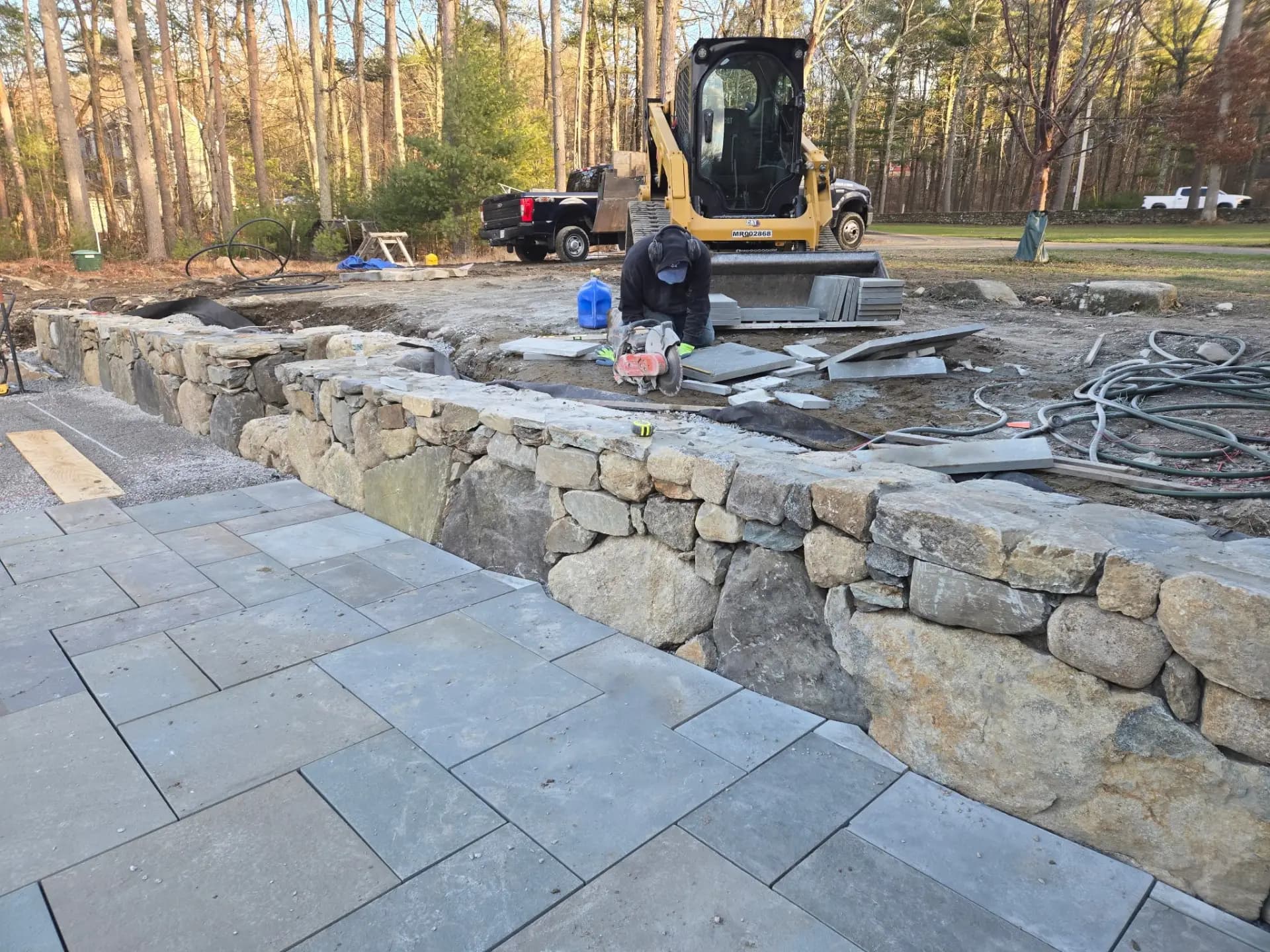
Permeable pavement can reduce runoff when the site, design, base, overflow route, installation, and maintenance support infiltration. The EPA permeable pavement guide emphasizes these system considerations. Permeable units alone do not make a poorly designed project sustainable.
Municipal stormwater programs are local. Check the specific town's current rules before assuming that a rain garden or permeable surface earns a credit.
Choose a manageable first project
Good first steps include fixing an irrigation leak, testing soil before buying amendments, replacing one poorly matched plant group, defining a reduced-mow area, or tracing runoff from one downspout. Record the baseline and review the result before expanding the change.
The irrigation, garden design, and lawn care pages outline topics available for an estimate discussion; they do not establish a particular product, environmental certification, or program. Use the contact form to confirm the requested scope, location, and current availability.