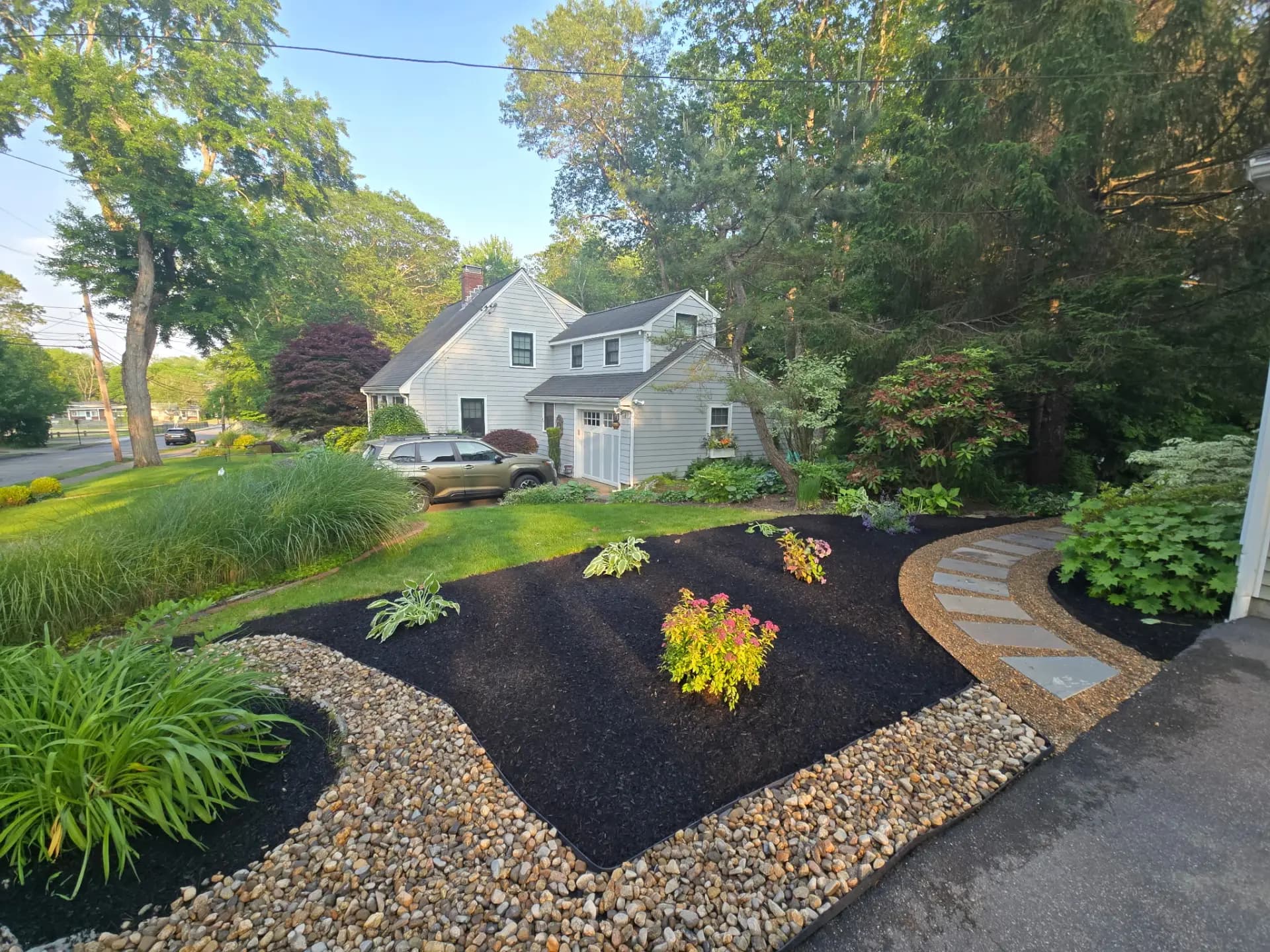
A pollinator garden is habitat, not just a bed with flowers. It should provide food across the growing season, places to reproduce and overwinter, and management practices that reduce avoidable pesticide risk.
This guide is written for homeowners considering a habitat garden in Clinton, Massachusetts. The indexed town page establishes Clinton as an intended content audience; it does not guarantee a particular service, schedule, or project availability.
Start with a season-by-season gap check
List every existing flower by bloom period. The Massachusetts Division of Fisheries and Wildlife recommends season-long floral resources for bumblebees, while the Massachusetts Department of Agricultural Resources publishes a native plant guide with bloom and site information.
Look for gaps in early spring, summer, and late summer into fall. Choose plants only after checking light, moisture, mature size, and verified regional native status.
Group plants so the garden is easy to find
A collection of isolated single plants can be harder for pollinators to use and harder for a homeowner to maintain. The state pollinator habitat framework recommends planting visible groups, including groups of five or more where the space and mature spread allow.
Repeat a limited palette in drifts. This creates a clear planting pattern and makes it easier to tell a desired plant from a weed during establishment.
Include both nectar plants and host plants
Adult butterflies may visit many flowers, while their caterpillars can depend on particular host plants. Milkweed species are the host plants for monarch caterpillars. Other butterflies and moths use different herbaceous plants, shrubs, and trees.
Do not add a host plant by common name alone. Confirm the botanical name, Massachusetts status, mature behavior, and site conditions. Some plants spread strongly and need a boundary that the maintenance plan can support.
Add different flower forms
Use a mix of open flowers, clusters, and tubular forms that bloom at different heights. A sample sunny palette to verify against the state guide might include:
- butterfly weed (Asclepias tuberosa);
- wild bergamot (Monarda fistulosa);
- purple coneflower (Echinacea purpurea);
- New England aster (Symphyotrichum novae-angliae);
- little bluestem (Schizachyrium scoparium) for structure.
This is not a universal planting plan. Soil moisture, available width, shade, deer pressure, utilities, and sight lines may make another state-listed species more suitable.
Preserve nesting and overwintering material
Many native bees nest in soil or plant stems rather than managed hives. Butterflies and other insects may overwinter in leaf litter or plant material. Where it is safe and compatible with access, leave some undisturbed soil, hollow or pithy stems, seed heads, leaves, and woody habitat.
Make the habitat intentional: keep a defined path or edge, identify material that stays, and remove plants that are prohibited or pose a property concern. Delay spring cleanup in part of the bed until conditions and new growth make the work appropriate.
Provide water without creating stagnant containers
A shallow source with safe landing surfaces can provide water, but it needs routine cleaning and refilling. Do not leave a container unmanaged. Follow local mosquito-control guidance and remove standing water that cannot be maintained.
Reduce pesticide risk with a decision process
The Massachusetts Pollinator Protection Plan emphasizes habitat and integrated pest management. Identify the plant, pest, and level of damage before treating. Use cultural or mechanical steps where appropriate, tolerate limited feeding when it does not threaten the plant, and follow the current label and Massachusetts requirements for any pesticide.
“Organic” is not a guarantee that a product is harmless to pollinators. Avoid treating open flowers and seek current expert guidance when intervention is necessary.
Plan for establishment
The state habitat framework explains that new pollinator plantings can require sustained watering and weed management during establishment. Write down:
- a watering trigger based on soil moisture;
- who identifies and removes weeds;
- which plants may be allowed to spread;
- when failed plants will be replaced;
- how paths and edges remain accessible;
- which stems and leaves stay through winter.
Lower maintenance later does not mean zero work in the first season.
Review the garden each year
At the end of the growing season, record bloom gaps, plants that outgrew the space, water problems, unwanted spread, and observed pollinator use without turning a single observation into a guaranteed outcome. Adjust one section at a time.
This article focuses on habitat layout. For regional native status and site-based species selection, use the native plants guide. For a broader resource-conservation plan, use sustainable landscaping practices.
The garden design and irrigation pages provide topics for an estimate discussion. Use the contact form to confirm the location, requested scope, and current availability; this article does not claim pollinator credentials, nursery sourcing, project outcomes, or service throughout MetroWest.