Snow-covered landscape in Boston area - Monges Landscaping winter servicesAutumn foliage in Boston area - Monges Landscaping fall cleanup servicesLush green landscaping in Boston area - Monges Landscaping spring servicesLush green landscaping in Boston area - Monges Landscaping summer services
    Fall Services

    Winterization

    Protect your plants, irrigation systems, and outdoor features from winter damage with our winterization services.

    Get a free Winterization estimate

    Professional Winterization Services

    Winterization

    Prepare your landscape for New England's harsh winters with comprehensive winterization services from Monges Landscaping, serving Boston, Cambridge, Newton, Brookline, Wellesley, and communities throughout Metro West and Worcester. Massachusetts winters are among the most punishing in the country, bringing sustained freezing temperatures, heavy snow loads, ice storms, and repeated freeze-thaw cycles that can devastate unprotected landscapes. Without proper winterization, homeowners routinely face thousands of dollars in spring repairs to irrigation systems, plants, hardscaping, and outdoor features. Our winterization package is designed to safeguard your valuable landscape investment before the first frost arrives, so your property emerges from winter healthy and ready to thrive.

    Why winterization matters in Massachusetts cannot be overstated. The Boston area experiences an average of 108 days below freezing each year, with temperatures regularly dropping into the single digits and teens from December through February. These conditions wreak havoc on irrigation systems, as water left inside pipes expands when it freezes, cracking PVC lines, shattering sprinkler heads, and destroying valve diaphragms. Unprotected plants suffer wind burn, desiccation, frost heaving, and root damage. Hardscape features like stone walls and pavers can shift and crack from frost action in the soil below. Without winterization, you are essentially gambling with your entire landscape investment each year.

    Our winterization process begins with the most critical component: a thorough irrigation system blowout. Using a commercial-grade air compressor set to 50-80 PSI (calibrated for your specific pipe material — lower for polyethylene, higher for PVC), our technicians systematically force compressed air through every zone in your irrigation system. We start from the zone farthest from the compressor and work inward, ensuring all water is expelled from mainlines, lateral lines, sprinkler heads, drip emitters, backflow preventers, and valve bodies. Each zone is blown out for 2-3 minutes until no water mist is visible from the heads. We then manually drain any remaining water from the backflow preventer and shut off the main water supply to the system. This process prevents the single most expensive winterization failure — a cracked mainline or burst backflow device can cost $500-$2,000 or more to repair in spring.

    Plant protection is the second major phase of our winterization service. Different plants require different levels of protection based on their hardiness and exposure. Broadleaf evergreens like rhododendrons, azaleas, mountain laurels, and boxwoods are among the most vulnerable to winter damage in Massachusetts. These plants continue to lose moisture through their leaves all winter, but frozen ground prevents roots from replacing it, leading to desiccation — the brown, burned appearance you see on broadleaf evergreens in spring. We protect these plants by wrapping them in burlap screens that block drying winds while still allowing air circulation, or by applying anti-desiccant spray that seals leaf pores to reduce moisture loss.

    Newly planted trees and shrubs (those in their first 1-3 winters) receive extra attention. We install tree wraps on thin-barked species like maples, cherries, and dogwoods to prevent frost cracking — the vertical splits that occur when winter sun warms bark during the day and then rapid nighttime cooling causes it to contract and crack. Young trees are staked if necessary to prevent wind rock that can tear developing roots. Rose bushes are mounded with 8-10 inches of mulch or soil around the base to protect the graft union, the most vulnerable point on the plant.

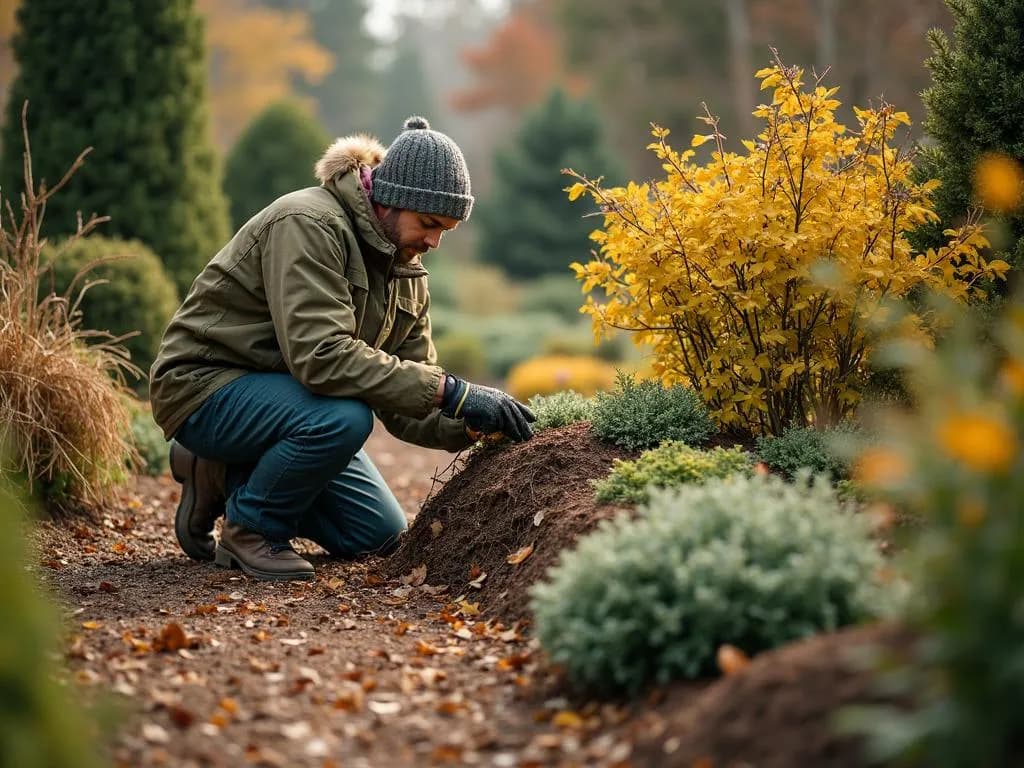
    Winter mulching is a critical but often misunderstood part of winterization. We apply a 3-4 inch layer of shredded bark or leaf mulch around perennials, shrub borders, and garden beds. The purpose of winter mulch is not to keep the ground warm — it is to keep it consistently cold. The real danger to perennials in Massachusetts is not cold itself, but the freeze-thaw cycles in late winter and early spring that heave plants out of the ground, exposing their roots to fatal drying and cold. A thick mulch layer moderates soil temperature fluctuations and keeps plants safely dormant until spring truly arrives. One critical rule: mulch should be kept 2-3 inches away from tree trunks and plant crowns to prevent moisture rot and rodent damage. Piling mulch against trunks (called volcano mulching) is one of the most common and damaging landscaping mistakes.

    Our winterization service also includes comprehensive perennial cutback. We cut back herbaceous perennials that die to the ground in winter, such as hostas, daylilies, and iris, removing dead foliage that can harbor fungal diseases, slugs, and other pests through the cold months. However, we selectively leave certain plants standing through winter — ornamental grasses provide winter visual interest and self-insulate their crowns, while plants like coneflowers and black-eyed Susans provide seeds for winter birds. We discuss your preferences during the service so the right plants are managed appropriately.

    Beyond plants and irrigation, our winterization package addresses outdoor features and furniture. We drain and store garden fountains, birdbaths, and water features to prevent cracking. Outdoor furniture is cleaned and stored or covered with weather-resistant covers. Ceramic and terracotta pots are emptied and brought indoors or wrapped in insulating material — these materials are highly susceptible to freeze-thaw cracking. For properties with outdoor lighting systems, we inspect fixtures, check wiring connections, and secure any components that could be damaged by snow loads or ice.

    The ideal time to winterize your Boston-area property is between mid-October and mid-November. Irrigation blowouts should be completed before the first hard freeze (sustained temperatures below 28°F), which in the Boston area typically occurs in late October or early November. Plant protection can extend a bit later, through the end of November. Monges Landscaping closely monitors weather forecasts and coordinates winterization visits to ensure your property is protected at the optimal time. We schedule in advance, and demand is high during this window, so early booking is recommended.

    Many homeowners wonder whether they can handle winterization themselves. While some tasks like bringing in pots and covering furniture are straightforward, irrigation blowout requires specialized equipment (a commercial air compressor capable of sustained 50+ PSI at the right volume) and knowledge of system layout and operating parameters. Using too much pressure can damage components, while insufficient pressure leaves water behind. Improper plant wrapping can actually trap moisture and make damage worse. Professional winterization typically costs $200-$600 depending on property size and services included, while a single burst irrigation mainline can cost $500-$2,000+ to repair — making professional service an excellent return on investment.

    Common winterization mistakes we see include: waiting too long and having the first freeze catch your irrigation system unpressurized, wrapping plants too tightly so moisture and heat build up causing rot, using plastic sheeting instead of burlap which cooks plants on sunny winter days, failing to disconnect hoses from outdoor spigots, and not mulching newly planted trees and shrubs. Our trained technicians avoid all of these pitfalls and follow industry best practices refined over years of experience in the Massachusetts climate.

    Investing in professional winterization with Monges Landscaping saves significant money on spring repairs, protects your landscape investment, and gives you peace of mind through the entire winter season. When spring arrives, your property will be ready to bounce back quickly and beautifully. Contact Monges Landscaping at (978) 860-5474 for a free winterization estimate for your Boston, Cambridge, Newton, Wellesley, or Metro West property.

    Licensed & Insured
    10+ Years Experience
    5-Star Rated
    Free Estimates

    Ready for Professional Winterization?

    Get a free estimate today. We serve Boston, Metro West, and Worcester areas.

    What We Offer

    01
    Plant Protection
    02
    Irrigation Blowout
    03
    Winter Mulching
    04
    Shrub Wrapping
    05
    Equipment Storage
    06
    Perennial Cutback

    Benefits

    Prevents freeze damage
    Protects irrigation investment
    Ensures spring recovery
    Saves money on repairs

    What Our Clients Say

    Leaf Removal

    "Our property has over 20 large oak trees. Monges leaf removal service is a lifesaver! They come weekly during peak fall and our yard always looks immaculate."

    J

    Jennifer Adams

    Homeowner

    FAQ

    Frequently Asked Questions

    Stone patio walkway

    Ready to Transform Your Landscape?

    Get a free consultation and quote today